
Spring Boot Annotations Deep Dive
Advanced Dependency Injection, AOP, and Meta-Programming in Enterprise Java

Spring Boot’s power lies in its Annotation-Driven Architecture, enabling sophisticated dependency management, cross-cutting concerns, and modular configurations. While most developers know @Autowired and @RestController, modern enterprise applications demand a deep understanding of the internal mechanics and advanced patterns to design robust systems.
This article explores -:
Annotation hierarchies and meta-annotations
Dependency Injection internals and bean lifecycle management
Advanced Aspect-Oriented Programming (AOP) patterns
Conditional, profile-based, and environment-aware bean resolution
Custom annotation strategies and meta-programming
Enterprise-grade best practices and pitfalls
🚀 Elevate Your Java Backend Interview Game!
Preparing for a Java backend interview ? Equip yourself with our Real Interview Questions & Answers, featuring:
Expert-Selected Questions covering core Java, Spring Boot, Micro-services, AWS, security, system design, and more.
Detailed Answers & Explanations to help you understand and articulate your responses effectively.
Hands-On Code Examples using Java 8+ Streams and Spring Boot solutions.
Scenario-Based Questions to master problem-solving for real-world challenges.
Mock Interview Simulations for practice and confidence-building.
1. Annotation Hierarchies and Meta-Annotations
Spring annotations are heavily meta-programmed. For instance, @RestController is a composition:
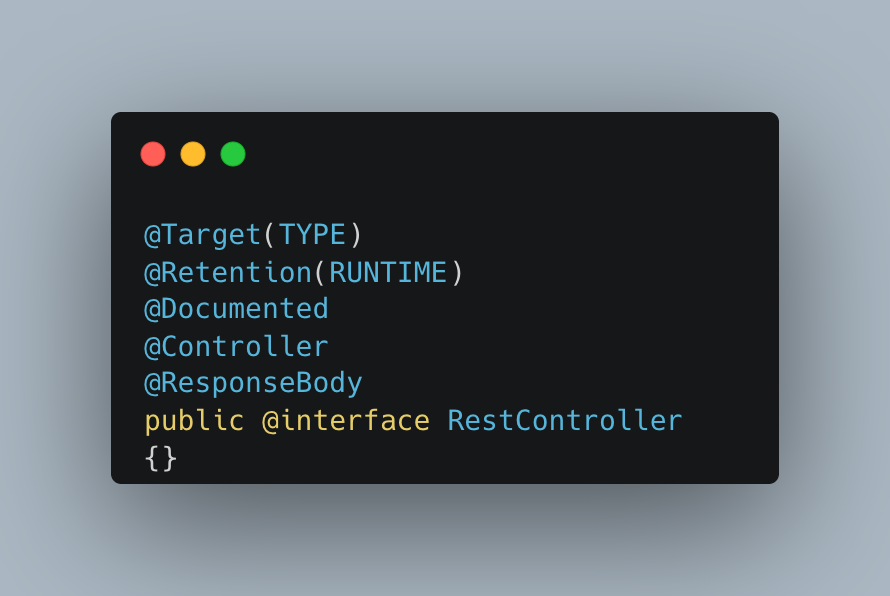
Understanding this allows developers to compose custom stereotypes that carry multiple semantics, reducing boilerplate across large services.
Stereotype Hierarchy:
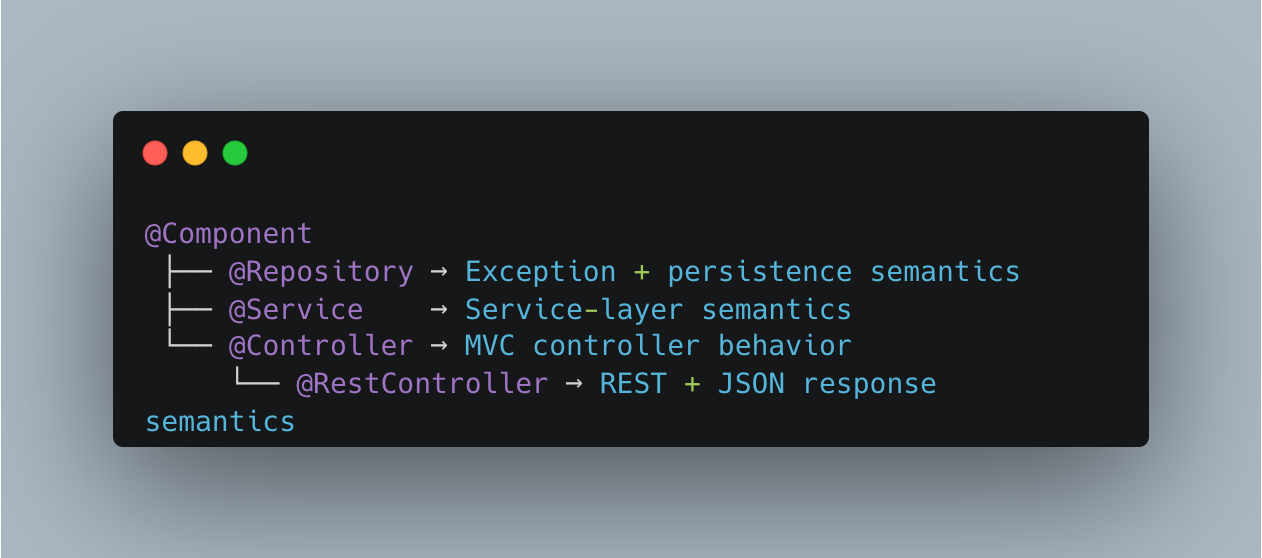
Meta-Annotation Implications:
Spring scans for
@Componentand all meta-annotations via ClassPathBeanDefinitionScanner.Custom annotations must retain the correct meta-annotations to participate in component scanning and DI.
2. Dependency Injection Internals
Spring DI is a cornerstone of the IoC container, but enterprise-grade applications require understanding how Spring resolves beans, injects dependencies, and manages lifecycles.
Bean Resolution Process
Classpath scanning: Detects
@Component-annotated classes.BeanDefinition creation: Metadata describing the bean (class, scope, lifecycle hooks, dependencies).
Dependency graph construction: Spring recursively builds the DAG of bean dependencies.
Instantiation and injection: Via constructor, setter, or reflection-based field injection.
Lifecycle callbacks:
@PostConstruct,InitializingBean,BeanPostProcessor.
Injection Patterns
Injection TypeProsConsConstructorImmutable, testable, avoids circular dependenciesCan be verbose for many dependenciesSetterFlexible, allows optional dependenciesMutable; risk of incomplete injectionFieldConcise, works with @AutowiredHard to test, reflection-based
Enterprise tip: Always prefer constructor injection to guarantee immutability and easier testing, especially in microservices.
Scopes and Proxies
Singleton: Default; shared across the container.
Prototype: New instance per injection; requires
@Scope(proxyMode = ScopedProxyMode.TARGET_CLASS)for DI into singletons.Request / Session / Application / WebSocket: Scoped to web contexts; Spring automatically generates proxies to maintain scope safety.
Proxy Example:
@Service
@Scope(value = “request”, proxyMode = ScopedProxyMode.TARGET_CLASS)
public class RequestScopedService {}
A CGLIB proxy is generated to inject a “placeholder” into singleton beans.
Ensures the correct request-scoped instance is resolved at runtime.
3. Advanced AOP Patterns
Spring AOP is proxy-based, not bytecode weaving by default. Understanding proxy types, join points, and advice execution order is critical for high-scale systems.
Advice Types & Execution Order
@Before→ Executes before the method.@After→ Executes after the method completes (normal or exception).@AfterReturning→ Executes after successful completion.@AfterThrowing→ Executes on exceptions.@Around→ Wraps the method; can control execution and modify return value.
Proxies & AOP
JDK Dynamic Proxy: Used if the target implements an interface.
CGLIB Proxy: Used for classes without interfaces or
proxyTargetClass=true.Internal calls bypass AOP proxies: Calling a proxied method from inside the same bean does not trigger advice, a common pitfall in enterprise systems.
Enterprise Example: Retry and Metrics
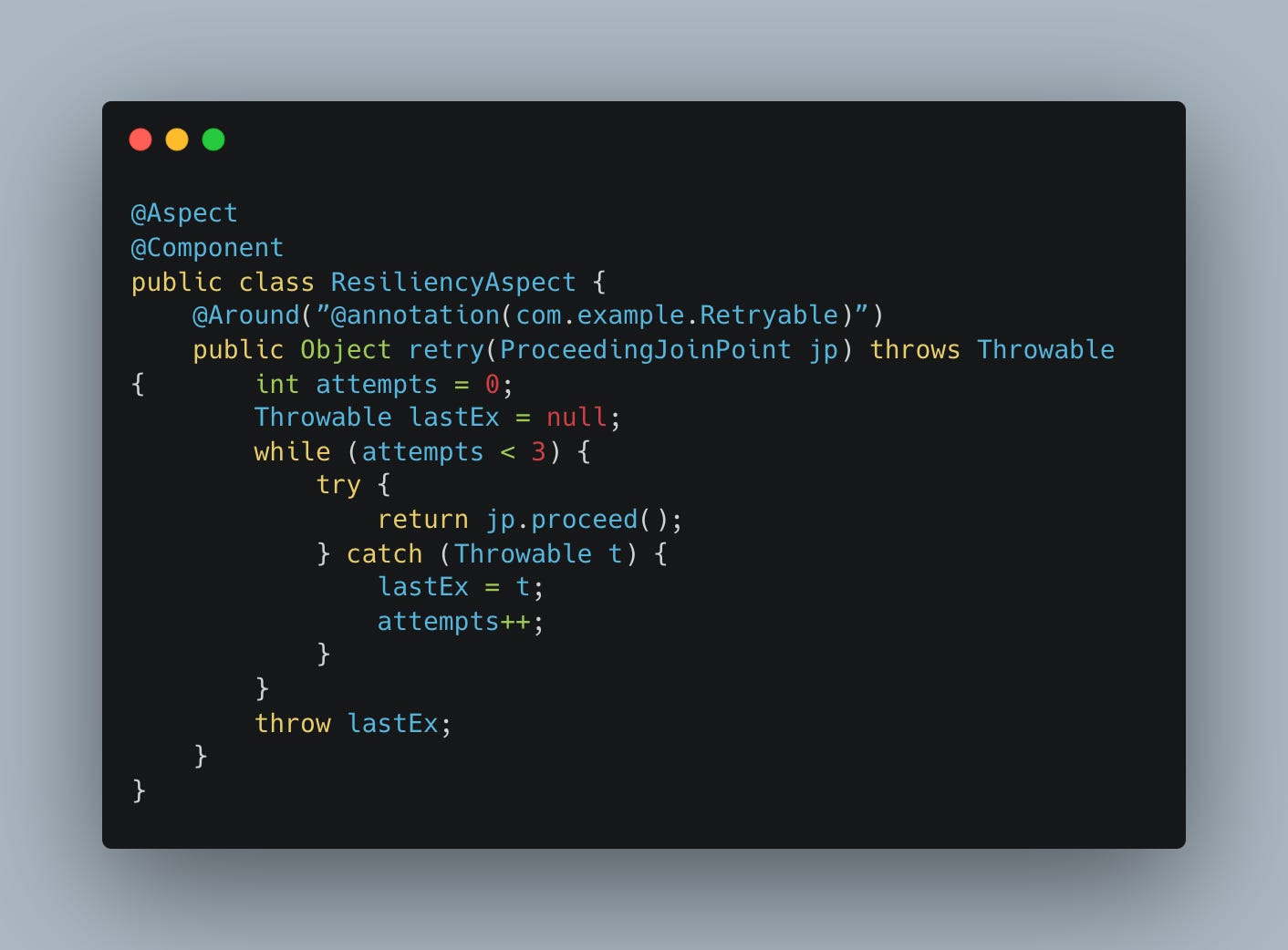
Combines cross-cutting resiliency logic without polluting service implementations.
4. Conditional, Profile-Based, and Environment-Aware Beans
Spring Boot allows fine-grained bean activation:
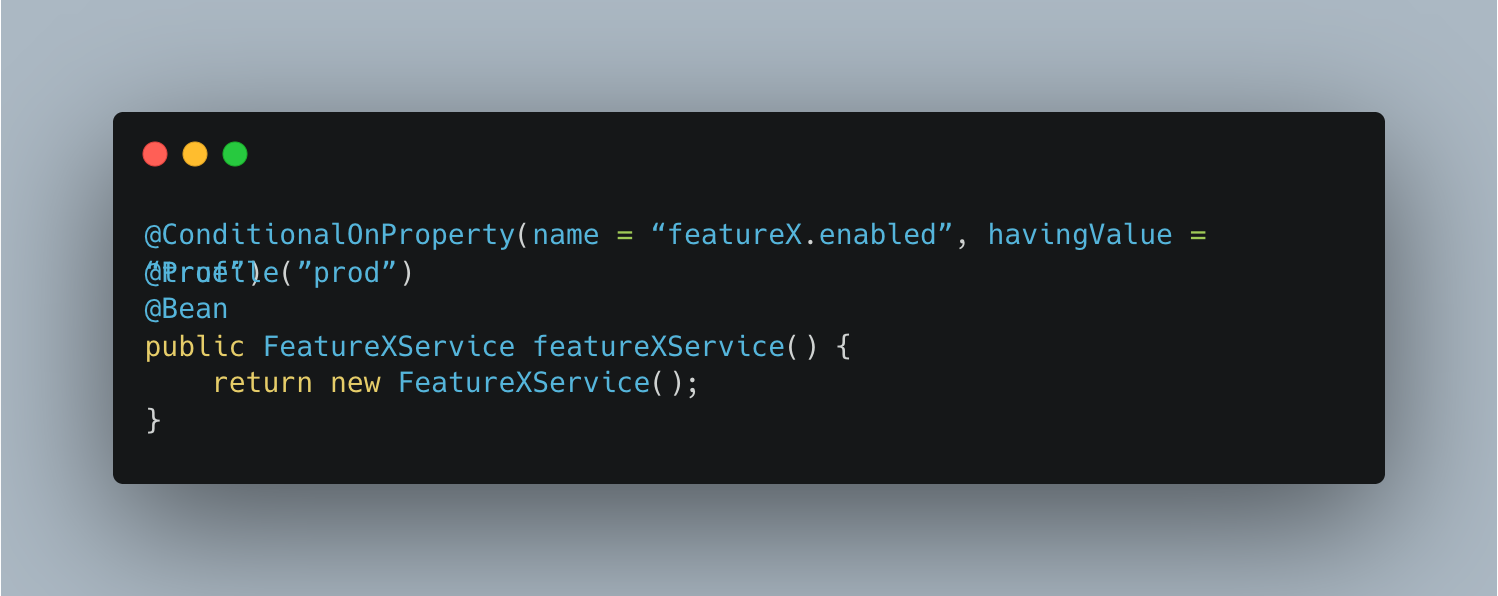
@Conditional*annotations allow modular, environment-specific wiring.Ideal for microservices, feature toggles, and A/B testing.
5. Custom Annotations & Meta-Programming
For large-scale projects, reusable meta-annotations enforce architectural patterns.
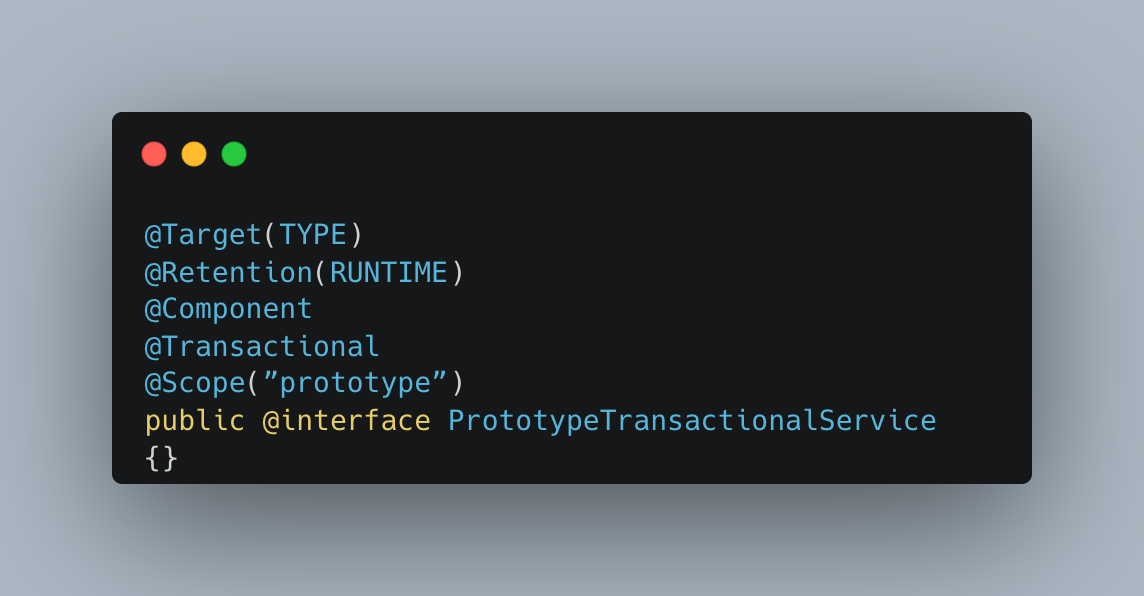
Combines component scanning, transactional behavior, and scope in one annotation.
Reduces boilerplate across multiple service classes.
6. Enterprise Best Practices
Prefer constructor DI and avoid field injection.
Leverage proxy-aware scopes for stateful beans.
Centralize cross-cutting logic with AOP, avoiding repetitive boilerplate.
Use conditional annotations to separate environments and modular features.
Create meta-annotations for reusable patterns.
Be aware of internal method calls bypassing proxies, especially with
@Transactional or AOP advice.
7. Putting It All Together: Enterprise Example
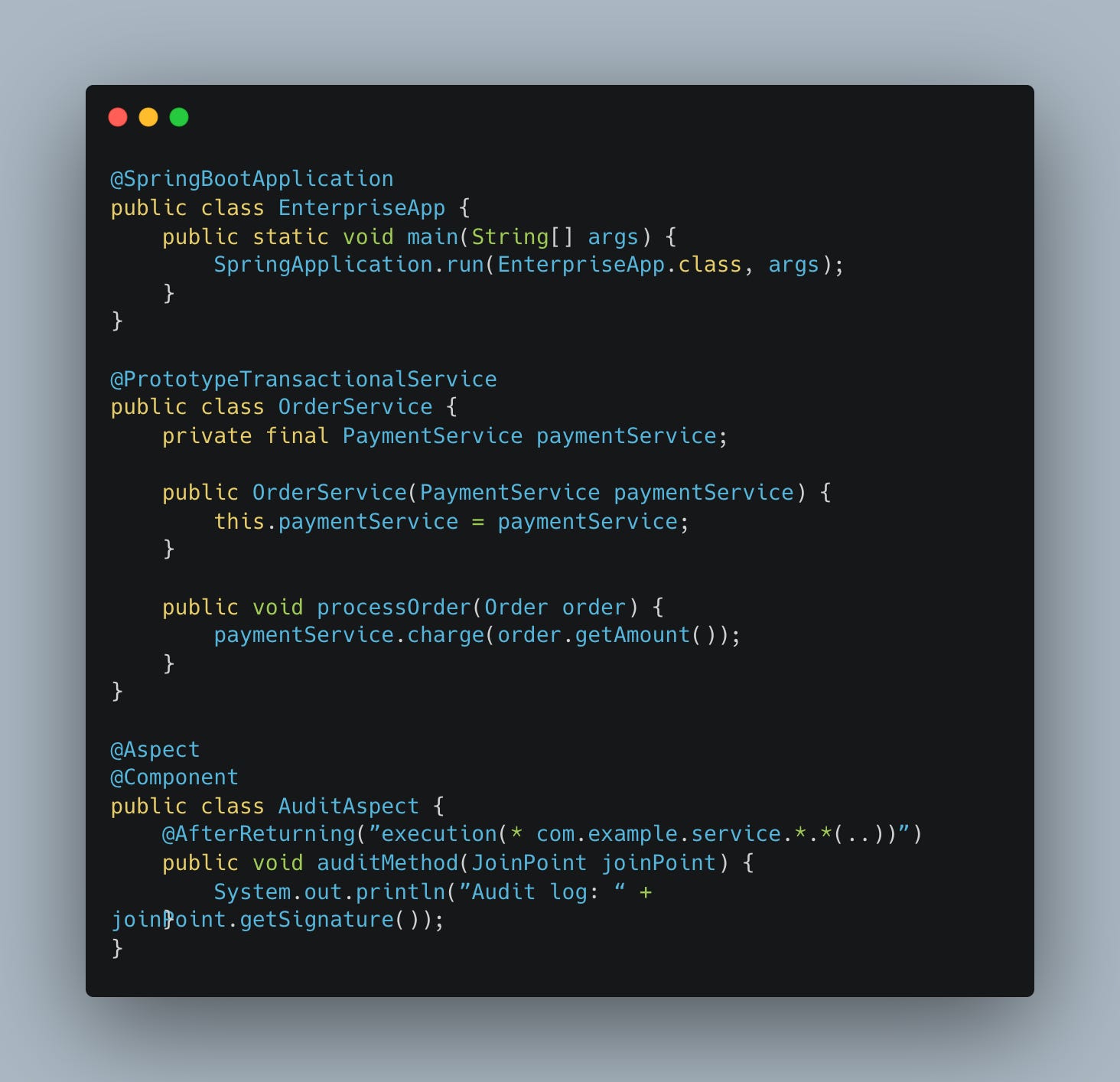
This example demonstrates advanced DI, scope management, AOP, and meta-annotations working in a cohesive, production-ready architecture.
Conclusion
For senior developers, Spring Boot annotations are a sophisticated toolset, not just a convenience. Mastering:
DI internals, scopes, and proxies
AOP mechanics and proxy limitations
Conditional and custom annotations